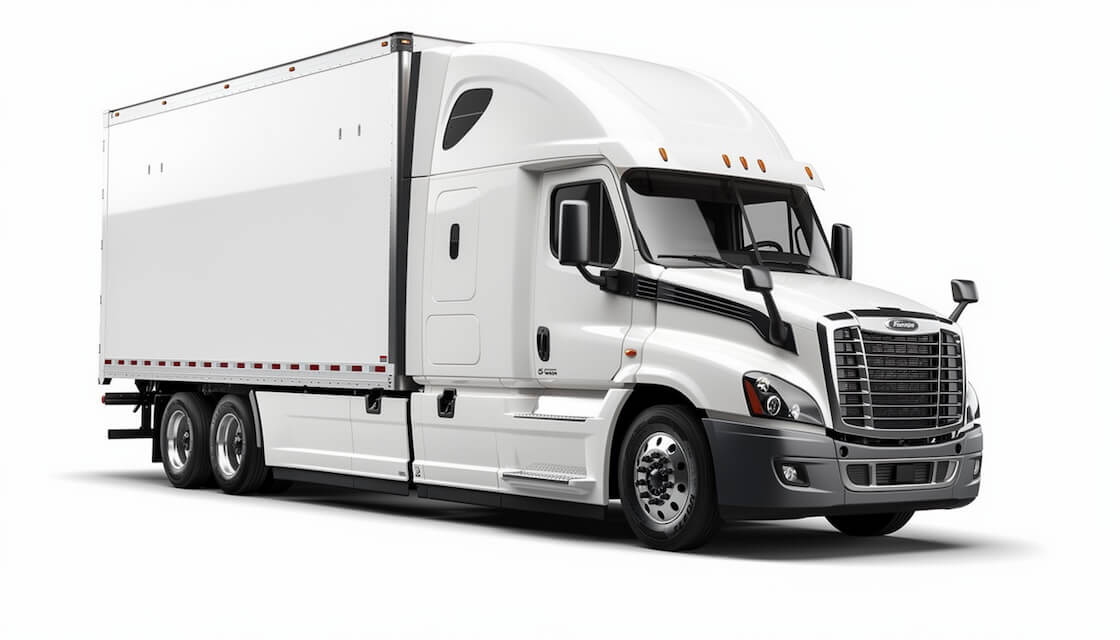
Run a Freightliner VIN lookup on any used Freightliner before you buy - and see everything the listing doesn't show. Zilocar's Freightliner VIN decoder pulls accident history, title brands (salvage, rebuilt, lemon), odometer records, ownership history, and auction photos - all in one report.
Every Freightliner VIN search covers 100+ sources: NHTSA, NICB, and DMV records from all 50 states. That means a Cascadia with a rolled-back odometer, an M2 106 with an undisclosed accident, or a Sprinter with a branded title - it all shows up in the data, even if the seller doesn't mention it.
Need a fast Freightliner VIN number lookup? Enter the 17-character code directly above, or browse Freightliner listings on this page by model. Cascadia, M2 106, Columbia, Classic XL, Sprinter - every vehicle here has a full report available. Get yours in seconds.
What Is a Freightliner VIN Number?
Every Freightliner commercial truck manufactured after 1981 is assigned a unique 17-character Vehicle Identification Number - commonly called a VIN. This code is not random: each position in the sequence carries specific information about the vehicle.
Positions 1-3 identify the manufacturer. Freightliner trucks assembled in the United States carry WMI codes starting with 1FU or 1FV depending on the vehicle type - both under the Daimler Truck North America umbrella. Freightliners built at assembly plants in Portland, Oregon, Cleveland, North Carolina, or Mount Holly, North Carolina all share US-origin WMI prefixes. Canadian-built units carry 2FU.
Positions 4-8 encode the vehicle descriptor: cab type, engine configuration, axle setup, and model line. Position 10 identifies the model year - for example, K = 2019, L = 2020, M = 2021. Positions 12-17 form the production sequence number unique to each individual truck. Running a Freightliner VIN decoder against these characters instantly surfaces the truck's original factory specs - and more importantly, anything that changed after it left the lot.