The report gave some additional…
The report gave some additional information that CarFax did not show, and from that I was able to make a more informed decision on the purchase of a used Corvette that I was looking into.
Free Hyundai VIN check. Decode any Hyundai VIN with NHTSA, see open recalls, then run a full Zilocar history report for accidents, title, and ownership.
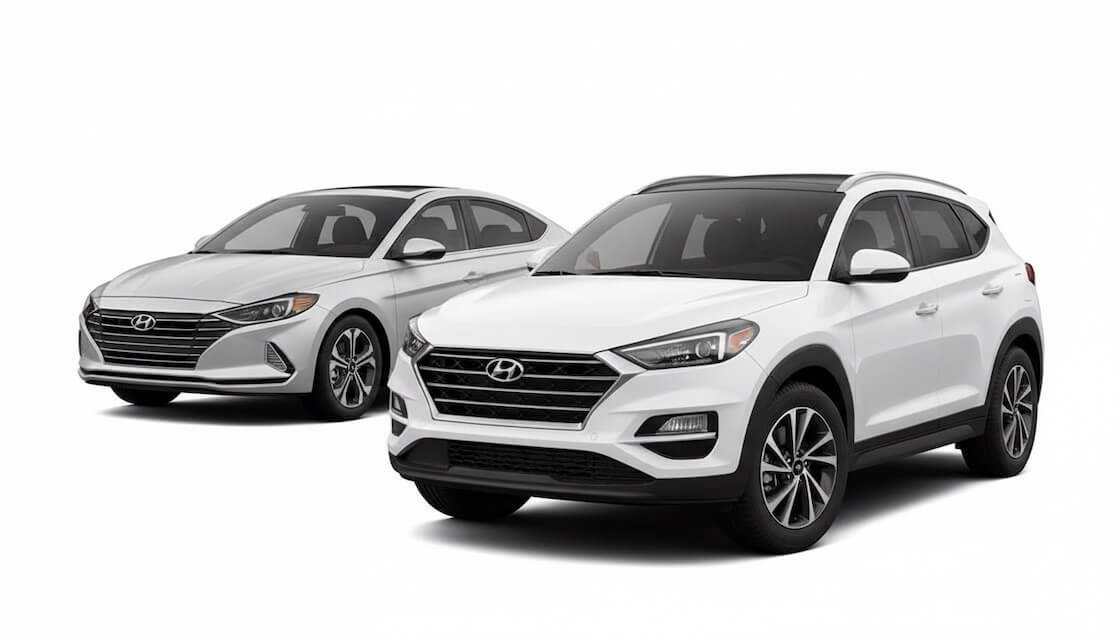
Decode any 17-character Hyundai VIN free with NHTSA's vehicle catalog. See specs, plant, model year, and open safety recalls in seconds. For the full history (accidents, title, odometer, ownership, and auction photos) run the complete Zilocar report.
Decoded via NHTSA VPIC. For accidents, title brands, and ownership history, run the full report.
Powered by NHTSA · 70+ data sources including NICB · 4.4/5 from 304 reviews
NHTSA's free decode confirms what the Hyundai is. It does not tell you what it has been through, and Hyundai's used-car market has more layered issues than most. The Theta II engine class action and the Kia Boyz anti-theft software upgrade together affect over 8 million US Hyundais.
| What NHTSA showed you | What the full Zilocar report adds |
|---|---|
| Manufacturer, plant, year, body class | Every reported accident with severity and damage area |
| Engine, drivetrain, fuel type | Odometer readings across the vehicle's life, with rollback flags |
| Open recall campaigns | Title brands (salvage, flood, rebuilt, lemon law buyback) |
| Vehicle type, GVWR | Ownership timeline and how many hands the car has passed through |
| Theft records from NICB member insurance carriers | |
| Lien and finance status | |
| Auction photos from past resale points |
Across the Hyundai lineup, NHTSA recall data aggregated by Zilocar shows two issues dominate the used-Hyundai picture: the Theta II GDI engine class action (3.9 million Hyundai and Kia vehicles, $1.3 billion settlement approved May 2021) and the Kia Boyz anti-theft software program (3.8 million Hyundai vehicles built 2011–2022 without engine immobilizers). Both can be verified by VIN.
Enter your VIN at the top of this page to see whether your vehicle is included in any of these campaigns or eligible for the engine settlement.
A free NHTSA decode returns factory data and open recalls. It does not include:
NICB reports 659,880 vehicles were stolen in the US in 2025, and 2011–2022 Hyundai vehicles without engine immobilizers were among the most-stolen models during the Kia Boyz TikTok-driven theft wave. NICB's free VINCheck flags only theft and salvage from member insurers; it does not show accident history or odometer detail. A Zilocar vehicle history report layers state DMV title data, NICB salvage and theft records, NHTSA recall data, insurance carrier accident reports, and auction sales history into one document.
See what a full Zilocar Hyundai report looks like
A Hyundai VIN has 17 characters following ISO 3779. Positions 1–3 are the World Manufacturer Identifier and tell you where the car was built. KMH marks a Korean-built Hyundai passenger car (Elantra, Sonata, Accent). KM8 marks a Korean-built Hyundai SUV (Tucson, Santa Fe, Palisade, Kona). KMF and KMJ mark Korean-built Hyundai trucks. 5NM marks a US-built Hyundai SUV from Montgomery, Alabama (HMMA plant). 5NP marks a US-built Hyundai passenger car from Montgomery. The new Hyundai Motor Group Metaplant America (HMGMA) in Bryan County, Georgia uses emerging WMI codes for Ioniq 5 and Ioniq 9 EVs as production scales from 2024. For deeper Hyundai-specific decoding (engine variant, trim, options), the Hyundai Forum decoder is the most thorough free community tool.
The VIN is in the lower-left corner of the dashboard (visible through the windshield), the driver's door jamb sticker, the title, registration, and insurance documents. The Hyundai Bluelink mobile app and MyHyundai owner portal also display it.
Theta II GDI engine class action settlement (2011–2019 Sonata, Santa Fe, Tucson): US District Judge Josephine L. Staton approved a $1.3 billion class action settlement on May 11, 2021 in In re Hyundai and Kia Engine Litigation, covering 3.9 million Hyundai and Kia owners. The Theta II 2.4L and 2.0L GDI engines suffered manufacturing debris in crankshaft oil passages, causing premature bearing wear, engine seizure, and 220+ non-collision fires by October 2018 per NHTSA. The settlement includes a 15-year/150,000-mile extended warranty for connecting rod bearing failure. A separate $210 million NHTSA civil penalty against Hyundai and Kia broke the agency's penalty barrier. The Engine II settlement (approved April 9, 2024) added 2.1 million more vehicles with Theta II 2.4L MPI, Gamma 1.6L GDI, and Nu 2.0L GDI engines. Eligibility runs at hma-thetasettlement.com.
Anti-theft software upgrade (2011–2022 Hyundai vehicles without engine immobilizer): Not a formal recall (NHTSA declined to mandate one) but a free customer satisfaction software upgrade covering approximately 3.8 million Hyundai vehicles plus 4.5 million Kia vehicles, 8.3 million US vehicles total. Affected vehicles use turn-key-to-start ignitions without engine immobilizers, the vulnerability exploited in the viral TikTok "Kia Challenge" or "Kia Boyz" theft method. NHTSA documented 14 crashes and 8 fatalities by February 2023. Push-button-start vehicles are not affected. A $200 million class action settlement covering 9 million Hyundai/Kia owners (May 2023) included $145 million for theft losses. A separate Pennsylvania AG-led $4.5 million multistate immobilizer settlement covers qualifying thefts on or after April 29, 2025 (claim deadline March 31, 2027), with up to $4,500 per qualifying theft. NHTSA's announcement is at nhtsa.gov/press-releases/hyundai-kia-campaign-prevent-vehicle-theft.
Theta II engine eligibility: Above. Used 2011–2019 Sonata, Santa Fe, and Tucson with Theta II GDI engines, plus 2010–2013 Santa Fe, 2011–2015 Sonata Hybrid, 2014–2021 Tucson with Nu 2.0L GDI, and 2014–2016 Elantra under the Engine II settlement. Verify the original engine work order before buying.
Anti-theft software completion (2011–2022 turn-key Hyundais): Verify whether the free software upgrade has been installed at a Hyundai dealer. The Hyundai Bluelink mobile app and MyHyundai owner portal show service history that includes the upgrade.
Recent recalls (2025–2026 model years): Hyundai issued multiple recent NHTSA recalls covering newer models; check the live recall block at the top of this page for your specific VIN.
| Tool | Best for | What you get |
|---|---|---|
| NHTSA vPIC | Manufacturer + plant + basic specs | ~15 standard fields, no auth required |
| Hyundai Forum decoder | Engine variant + trim + option codes | Community-built decoding of Hyundai-specific internal codes |
| Zilocar vehicle history report | Complete history before you buy | Accidents, title, odometer, owners, recalls, theft, auction photos |
The NHTSA decode at the top of this page is free and returns the official manufacturer-filed Hyundai VIN data. For deeper Hyundai-specific engine and trim decoding, the Hyundai Forum community decoder is the most thorough free tool. A full Zilocar vehicle history report covers what NHTSA and community tools do not: accident records, title brands, odometer readings, ownership timeline, and auction history (essential for used Hyundais built 2011–2022, where prior theft and theft-recovery patterns are common).
The report gave some additional information that CarFax did not show, and from that I was able to make a more informed decision on the purchase of a used Corvette that I was looking into.
NHTSA decode returns factory specs and open recalls. A full Zilocar report adds accidents, owners, title brands, odometer history, theft, and auction photos. Everything you need before you commit to a used Hyundai, especially for 2011–2022 vehicles where engine settlement eligibility and anti-theft status matter. Zilocar aggregates 70+ sources including NHTSA and NICB, processing 30,000+ daily VIN checks.
· See a sample report · Return to the Zilocar VIN decoder hub
Kia VIN decoder · Genesis VIN decoder · Toyota VIN decoder · Honda VIN decoder